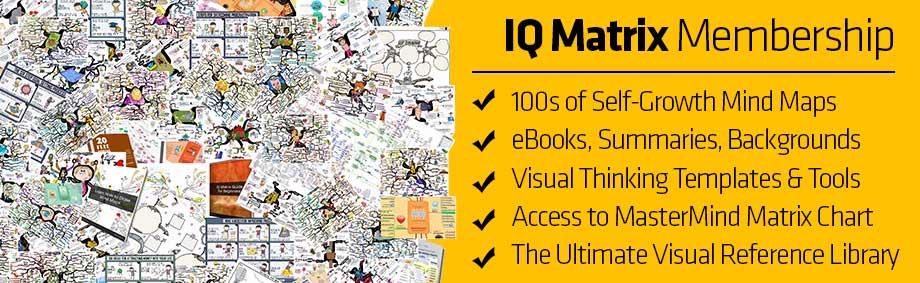
One cannot alter a condition with the same mindset that created it in the first place. – Albert Einstein
One of the World’s Greatest Thinkers
Albert Einstein is without question one of the greatest and most recognized icons of the past hundred years. His accomplishments and discoveries have challenged how we think while radically altering our perspective of reality.
Most of us know Einstein through television documentaries and books. He comes across as a little bit of a nutty professor at times, however, this couldn’t be further from the truth. Einstein was not only a scientist but also an inspirational and successful individual who has taught us valuable lessons about what it takes to make a mark in this world.
What follows is a transcript of a hypothetical conversation I had with Albert Einstein. I’ve taken Einstein’s words statements that have been commonly attributed to Einstein and turned them into a dialogue about all aspects of success, achievement, creativity and much, much more as they relate to our modern era. The interview provides many tremendous insights into the mind of this great man.
Please keep in mind that many of these quotes are written word-for-word as Einstein spoke them. However, at times I have added additional words in order to spark further discussion and linkages between topics.
As you read through this transcript I’m confident you will discover the qualities, traits, attitude, values, and beliefs that transformed a seemingly lowly patent office worker into one of the greatest scientists and thinkers of the past two thousand years of human history. Moreover, I hope you will find inspiration in Einstein’s words to help you with your life’s endeavors.
Conversations with Albert Einstein
I’ve broken down this interview into specific topics that Albert Einstein has been famously quoted on. These topics include:
- Imagination
- Simplicity
- Success
- Obstacles
- Curiosity
Let’s take a look at Einstein’s thoughts in each of these areas.
Einstein on Imagination, Creativity, and Intuition
Adam: There’s been a lot of talk of late about the importance of knowledge. It is said that knowledge is the key to success and career advancement. In fact, even at school, the idea of having the right kind of knowledge seems to form the bedrock of our education system. What are your thoughts about this?
Einstein: Without a doubt in my mind, imagination is far more important than knowledge. Knowledge is limited to all we now know and understand, while imagination embraces the entire world, and all there ever will be to know and understand. Imagination is in fact everything. It is the preview of life’s coming attractions. However, at the same time you must bear in mind that the wonderful things you learn in your schools are the works of many generations. All this is put in your hands as your inheritance in order that you may receive it, honor it, add to it, and one day hand it on to your children.
Adam: That’s very interesting. Schools no doubt provide a great platform for knowledge, however, imagination and creativity aren’t really encouraged at school these days. Instead, it’s all about using logic, facts, and information. I guess logic and knowledge are important, but we might very well be missing out on something much more powerful.
Einstein: Yes, of course. Logic will no doubt get you from A to B. However, imagination will take you everywhere. I am a scientist, and yet I am enough of an artist to draw freely upon my imagination.
Adam: Is that how you generate all these scientific theories and ideas that others at first tend to ridicule and criticize? Is it a result of your creative imagination?
Einstein: If at first, the idea is not absurd, then there is no hope for it. My imagination considers all possibilities even if at first some of them might seem a little on the crazy side.
Adam: I guess that imagination is probably the secret to creativity and everything you have managed to accomplish to date.
Einstein: I want to be very honest with you Adam (leaning-in to whisper). The secret to creativity is knowing how to hide your sources.
Adam: So what you’re saying is that you take ideas from other areas, people, maybe even from the environment and combine them with something else that brings your ideas and theories to fruition. Is that correct?
Einstein: Yes, that is correct. However, the only real valuable thing at that point is intuition. I use my intuition, not logic, to help make these important decisions.
Einstein on Simplicity
Adam: One thing that impresses me about your theories is the fact that you seem to be able to make the most complex of ideas sound simple.
Einstein: Yes, I endeavor to make everything as simple as possible, but not one bit simpler.
Adam: That’s very interesting. There’s all this talk these days about simplicity, simplifying your life, and clearing the clutter. I guess when it comes to idea generation this is also very relevant. When communicating our ideas to others we should probably focus more on the simplicity of our message rather than bogging people down with too much information. One powerful method that I have personally found quite valuable comes in the form of visual thinking.
Einstein: Any intelligent fool can make things bigger, more complex, and more violent. It takes a touch of genius — and a lot of courage — to move in the opposite direction.
Einstein on Success and Achievement
Adam: I was wondering if you had any advice for those listening to success and achievement?
Einstein: Well, the most important piece of advice I could give is to say that the world we have created is a product of our thinking. It cannot be changed without changing our thinking.
Adam: So what you’re saying is that our thoughts determine our reality, or at least our experience of reality.
Einstein: Actually, reality is merely an illusion, albeit a very persistent one.
Adam: So, we create our reality through “thought”. I guess that makes us limitless from a certain perspective.
Einstein: Yes and no. It is only once we accept our limits, that we go beyond them.
Adam: What about those who just don’t believe in themselves and their own abilities? All they see is their limitations and nothing else.
Einstein: To them I would say that it is better to believe than to disbelieve; in so doing you bring everything to the realm of possibility.
Adam: That makes a lot of sense, however many people out there might simply not buy into this idea of just believing in something. How could just believing in something make everything possible? To those who have achieved a great deal of success in life, this might seem like reality, but what about those who are struggling to accomplish their dreams. What could you say to them? Should they just believe? Is that all it takes? What I’m really trying to get at here is how should they live their lives? What kind of mindset must they begin cultivating?
Einstein: There are only two ways to live your life. One is as though nothing is a miracle. The other as if everything is. Once you begin living this way, everything becomes possible.
Adam: That’s a beautiful way to put it. But I guess there will be skeptics out there who will say that you’re the smartest person on the planet and you can, therefore, create miracles on a daily basis. What have you got to worry about? You don’t live in their world; you don’t see things from their perspective…
Einstein: Well then. They would indeed have it all wrong. You see, it’s not that I’m so smart, it’s just that I stay with problems longer. You have to learn the rules of the game, and then you have to play better than anyone else. That is exactly how I solve my problems.
Adam: That’s very interesting. So the fact that you are willing to persist and stick with problems for longer, while others are giving up, gives you an edge. I guess it all comes down to the attitude that we project into the universe while trying to solve our life’s problems.
Einstein: Yes indeed that is correct. Weakness of attitude becomes weakness of character, and as a result nothing gets accomplished. In fact the ideals which have lighted my way, and time-after-time have given me new courage to face life cheerfully, have been kindness, beauty, and truth.
Adam: Are they your keys to success?
Einstein: Know where to find the information and how to use it — that’s the secret to success. However, I try not to become a man of success, I rather try to become a man of value. Every day I remind myself that my inner and outer life is based on the labors of other men, living and dead, and that I must exert myself in order to give in the same measure as I have received and am still receiving. Humility is the key.
Einstein on Obstacles and Setbacks
Adam: That’s an awesome way to live life. We can all certainly learn from that. I wanted to ask you, what advice would you give those who constantly seem to experience obstacles and setbacks that prevent them from moving forward?
Einstein: In the middle of difficulty lies opportunity. It’s as simple as that. Look for it, and you will find it.
Adam: Okay, so say a person believes that opportunity lies within every difficulty. They look for it, but can’t find it. They try really hard but don’t seem to be making any progress.
Einstein: Well if that is the case, then they must understand that one cannot alter a condition with the same mindset that created it in the first place. Have you ever heard the definition of insanity?
Adam: Um, no. I don’t think so.
Einstein: Insanity is doing the same thing over and over again, but expecting different results.
Adam: Okay, so we must be flexible when approaching problems; we must be willing to look at them from a different perspective and see new possibilities. I guess when it comes down to it, some people are simply afraid of making mistakes.
Einstein: Anyone who has never made a mistake has never tried anything new.
Adam: Yes, I guess that’s very true. We must not be afraid of making mistakes or of stepping outside of our comfort zone. Mistakes lead us down new paths and open new opportunity and possibilities. I guess in theory this sounds great. However, what would you say to those who are trying to get their plans off the ground and nobody seems to believe in them or in their ideas?
Einstein: Great spirits have always encountered violent opposition from mediocre minds. It’s only when you look at yourself from a universal standpoint, that something inside always reminds or informs you that there are bigger and better things to worry about.
Einstein on Curiosity
Adam: That’s great advice. But how can we look at ourselves from a universal standpoint? Is it easy to do?
Einstein: The important thing is not to stop questioning. Curiosity has its own reason for existing. One cannot help but be in awe when he contemplates the mysteries of eternity, of life, of the marvelous structure of reality. It is enough if one tries merely to comprehend a little of this mystery every day. Never lose a holy curiosity.
Adam: Yes, asking questions, being curious… I guess that’s another key to success. But how could we apply this practice on a daily basis?
Einstein: It’s simple. Learn from yesterday, live for today, hope for tomorrow. The important thing is not to stop questioning. I am merely inquisitive.
Adam: I guess this inquisitive nature keeps you on your toes and learning new things every single day.
Einstein: The only thing that interferes with my learning is my education. Reading, after a certain age, diverts the mind too much from its creative pursuits. Any man who reads too much and uses his own brain too little falls into lazy habits of thinking.
Adam: That’s awesome advice. Some really big takeaways here. Thank you so much for taking the time to talk with me today. However, before I let you go, I have one final question I wanted to ask you. You’re considered to be one of the most intelligent and creative people that have ever lived. You must have answers for almost everything. I wanted to ask you a very important question that a lot of male listeners are dying to know the answer to. The question is: What is the secret to understanding women?
Einstein: I don’t know, I don’t care, and it doesn’t make any difference!
How to Use this iQuote Matrix
The above conversation with Albert Einstein provides an overview of the iQuote Matrix (found top of this post) that you can download for free and use as a reference wall poster. It’s an ideal reference tool for those wanting to model Einstein’s psychology or simply for those interested to learn more about this great man.
This iQuote Matrix is designed with three purposes in mind:
- Firstly, the quotations are designed to provide you with insights into Einstein’s personality, qualities, mindset, belief systems and attitude.
- Secondly, the power words extending from the middle branches are designed to pinpoint key qualities and behaviors that distinguished Einstein.
- Thirdly, key questions and statements extending from the quotations are designed to help you mimic Einstein’s thinking style and approach to life.
Time to Assimilate these Concepts
Did you gain value from this article? Is it important that you know and understand this topic? Would you like to optimize how you think about this topic? Would you like a method for applying these ideas to your life?
If you answered yes to any of these questions, then I’m confident you will gain tremendous value from using the accompanying IQ Matrix for coaching or self-coaching purposes. This mind map provides you with a quick visual overview of the article you just read. The branches, interlinking ideas, and images model how the brain thinks and processes information. It’s kind of like implanting a thought into your brain – an upgrade of sorts that optimizes how you think about these concepts and ideas. 🙂
Recommended IQ Matrix Bundles


If you’re intrigued by the idea of using mind maps for self-improvement then I would like to invite you to become an IQ Matrix Member.
If you’re new to mind mapping or just want to check things out, then register for the Free 12 Month Membership Program. There you will gain access to over 90 mind maps, visual tools, and resources valued at over $500.
If, on the other hand, you want access to an ever-growing library of 100s of visual tools and resources, then check out our Premium Membership Packages. These packages provide you with the ultimate visual reference library for all your personal development needs.